
GBR_RIP is a raster image processor library designed to convert the Gerber photo plotter format (RS274X) into a bitmap (BMP or TIFF) for use by image writers and machine vision/inspection equipment (AOI). GBR_RIP ships with an executable wrapper for the DLL; the OEM can use the library directly or can work with the wrapper which entails considerably less coding.
GBR_RIP is extremely fast and robust; it is currently used by over a dozen OEMs in applications such as laser photo plotters, Laser Direct Imaging (LDI) machines and PCB/substrate inspection systems.
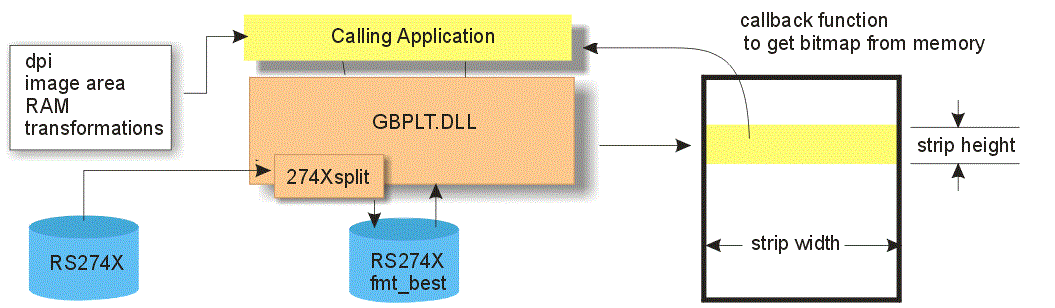
gbr_rip is designed to take a Gerber file input and convert it to a raster image (in memory) using a transform file which controls scaling, rotation, mirroring, window size and DPI. The calling program can then take this bitmap from memory, format it to whatever standard is required and write the data to disk.
Because gbr_rip can process small stripes of an image, there is no upper limit on how large an area or what DPI is set: the larger the image the more stripes are needed - however after each stripe is produced and consumed, memory is cleared.
For users who do not wish to write their own calling program for the gbr_rip library, we also offer an executable, gbr2tiff, that provides a command line interface to the raster library. We provide the source code to this wrapper (C++) in order that our customers can use it as a template.
The gbr2tiff executable can produce output in BMP and TIFF with compression (TIFF packbits) to reduce file size.